
More Than a Minor Sport: Remembering Tommy McMichael
Those involved in Scottish table tennis may have seen the news of Tommy McMichael’s death, and some of the obituaries. Born in 1935, he died in July this year. His story illustrates some significant themes in the evolution of table tennis in Scotland.
McMichael was one of a number of prominent table tennis players who went on to build substantial careers in other fields. Chester Barnes, for instance, later turned his attention to horse racing. Harold Evans, the legendary Sunday Times editor, had been a leading junior player and a self-confessed ‘ping-pong nut’ in his day. Evans brought the two strands together when he edited Ken Stanley’s Table Tennis: A New Approach in 1959. The acclaimed novelist Howard Jacobson drew on his early life as a table tennis fanatic in Manchester for his 1999 novel The Mighty Walzer. More recently, Sky Andrew (Football Agency & Entertainment) and Matthew Syed have also made their mark beyond the sport, the latter establishing a successful career as an author and journalist.
Like Syed, and closer to home Richard Yule, McMichael combined sporting achievement with academic ability, obtaining a degree in applied chemistry at Heriot-Watt College. After graduating, he worked first for the National Coal Board, before moving to Cerebos Salt and then Rank Hovis McDougall. He subsequently enjoyed a successful business career across South East Asia and the Pacific, while remaining a keen sportsman.
His life illustrates the point made by former Scottish national champion and coach Eddie Still: although table tennis is often regarded as a ‘minor sport’ and overlooked, it is ‘not played by inferior people’. McMichael’s achievements are a particularly good example. His career, like those of others who have made their way beyond the sport, also highlights a persistent difficulty: making a living from table tennis in Scotland has never been easy, although there are perhaps more paid coaching and development opportunities today than in the past. So. leaving the sport to forge a professional career has generally been a necessity.
McMichael was also an important part of one of the most compelling stories in Scottish table tennis: the rise and fall of Gambit Table Tennis Club. This is a subject I have been researching for a forthcoming article, ‘Gambit Table Tennis Club and the Making of League Table Tennis in Edinburgh’, due to appear in the Book of the Old Edinburgh Club in Spring 2027. The work builds on the initial research undertaken by Michael MacLaren in the 1990s, before his sudden death, as well as a rich archive of material from Bert Kerr’s personal collection. Kerr was a key figure within Gambit for at least four decades, remaining involved until the club’s sad demise in 1989.
At the heart of Gambit’s story is the way a club that began almost accidentally as an offshoot of Stockbridge Chess Club (hence the name) developed so rapidly. The Second World War played an important part. Many people took up the sport while serving in the forces. Johnny Leach, for example, began the war as a decent player and ended it as a world-class performer. Similarly, Helen Elliot, Scotland’s greatest ever player, first took up table tennis while serving as an ARP warden. Gambit also benefited from the substantial post-war boom, which brought the sport greater prominence within British sporting life, reflected in extensive media coverage and huge competition entries.
By the mid-1950s, Gambit had become the leading club in Scottish table tennis. The scale of its achievement was remarkable. Between 1944 and 1981, it won the Scottish Team Cup a record twenty-four times and the Edinburgh and District League thirty-one times. Its greatest achievement came in 1957, when it provided all five members of Scotland’s team at the World Championships in Stockholm: Tommy McMichael, Bert Kerr, Ian Barclay, Helen Elliot and Helen Houliston. ‘Pengrip’, the table tennis correspondent of the Edinburgh Evening Dispatch described this as ‘a unique honour’ bestowed on the Gambit Club.
The achievement was remarkable not simply because of the club’s relative youth, but because of what it represented. Within a generation, a table tennis section that had begun almost accidentally within a chess club had become the representative of Scottish table tennis on the international stage. Gambit’s rise demonstrated what Edinburgh’s voluntary sporting culture could achieve, producing a club whose influence extended well beyond the city.
Another important factor in Gambit’s success was the arrival in Edinburgh, during and immediately after the war, of a number of exceptionally strong players, particularly from Poland and England. Among them was Miro (Miroslav) Jarecki, described in a match programme as ‘one of Warsaw’s leading pre-war players’ and ‘perhaps the best of the Polish players who came to Edinburgh’. Long-time Gambit secretary Hayman records that Jarecki was recruited at a tournament, allowing the club to ‘secure’ the ‘most skillful of the Polish players who came to Edinburgh’.
Another prominent figure was Johnny Miller (born Müller), who went on to become Scottish singles champion in 1956 and was among the early adopters of the sponge bat. These former Polish servicemen brought considerable technical knowledge and competitive experience to Scottish table tennis. Their influence was particularly evident at Gambit, described as ‘a magnet for visiting table tennis stars’. This was the environment in which McMichael developed his game.
An illustration of McMichael’s role in Gambit comes from an account of a Scottish Team Cup match, by Bob Hayman.
Semi-Final vs Glasgow Central YMCA at Central YMCA, Sauchiehall Street, 24.4.1954.
This was one of the finest wins in the club’s history. Glasgow Central were the holders and their three players had (with one another) formed the West of Scotland team which had beaten the Edinburgh League in the Scottish League Cup final. By this win the Gambit players succeeded where their league had failed. The first game provided a real surprise when Tommy McMichael, playing his best ever, soundly defeated Scottish Closed champion Eddie Still. Scores were leveled when Johnny Campbell beat Bertie Kerr. Bertie seemed surprisingly unsure of himself and lost rather easily. Gambit took the lead again when Helen, in top form, won a great battle against the hard hitting Metcalfe. Tommy then proved his win over Still was not a fluke by beating Campbell in fine fashion. Helen then placed Gambit in a winning position by decisively defeating Still. Bertie clinched matters by defeating Metcalfe. Here Bertie redeemed his shaky display against Campbell by the manner in which he disposed of Metcalfe.
Tommy McMichael was part of one of the great stories of Scottish sport: the remarkable rise of Gambit TTC. It is also a story tinged with sadness. Despite using at least six different venues across the city, the club never managed to secure a permanent home. Over the decades, Gambit played at several venues, including Murrayfield Indoor Sports Club, Bonaly Hall in Polwarth, North Merchiston Boys’ Club and Murrayfield Memorial Club in Roseburn. It ultimately folded when the rent on its final premises in Easter Road rose beyond the club’s means. Kerr ruefully recalled: ‘We struggled for over 20 years to find money from somewhere, but it’s not a rich sport.’
Richard Yule has argued that this absence of an ‘ownership culture’ profoundly weakened Scottish table tennis. Most clubs have instead led peripatetic existences, dependent on rented or borrowed accommodation and therefore vulnerable to decisions beyond their control.
-
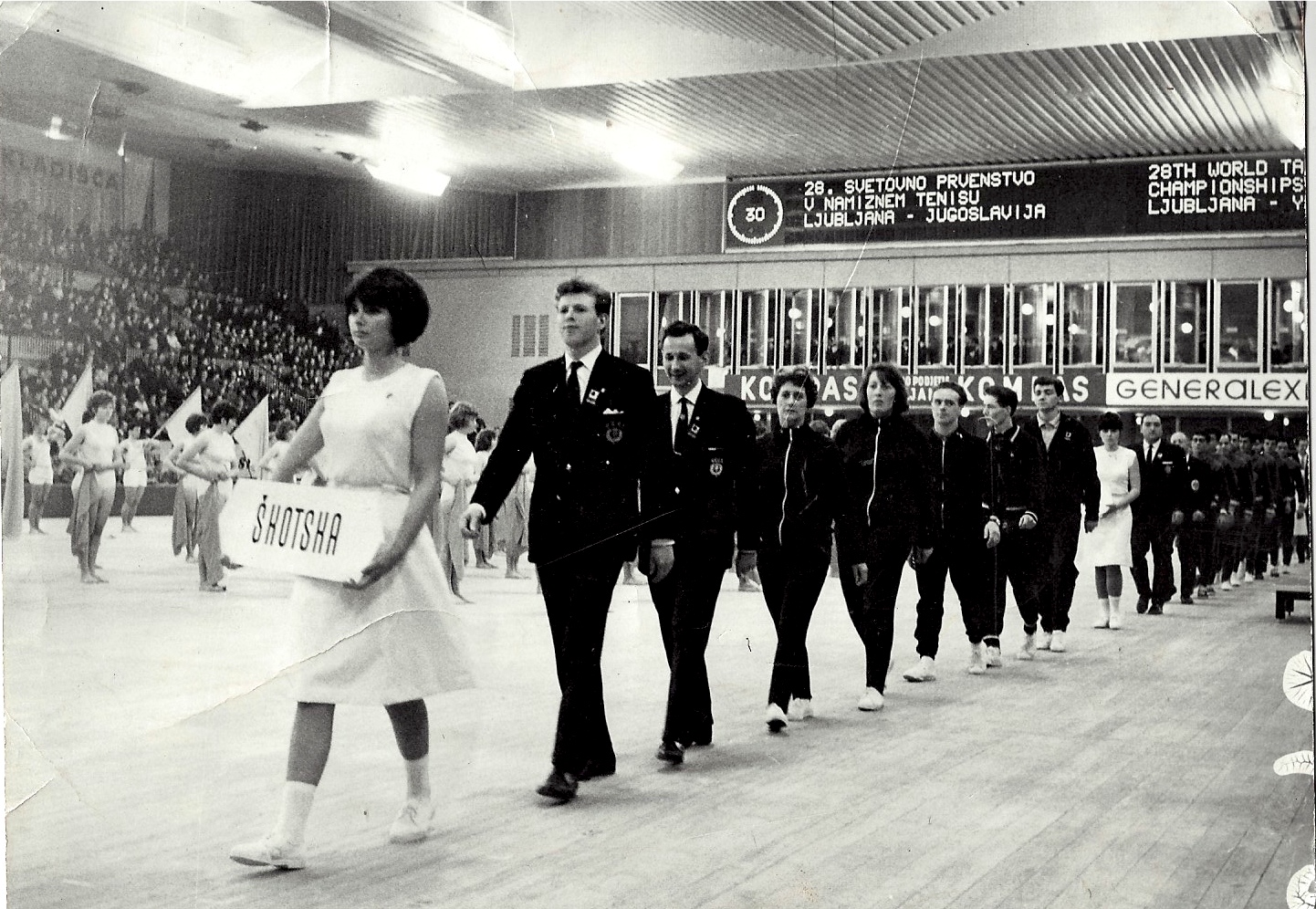
- Ljubljana 1965 Scotland Team
-
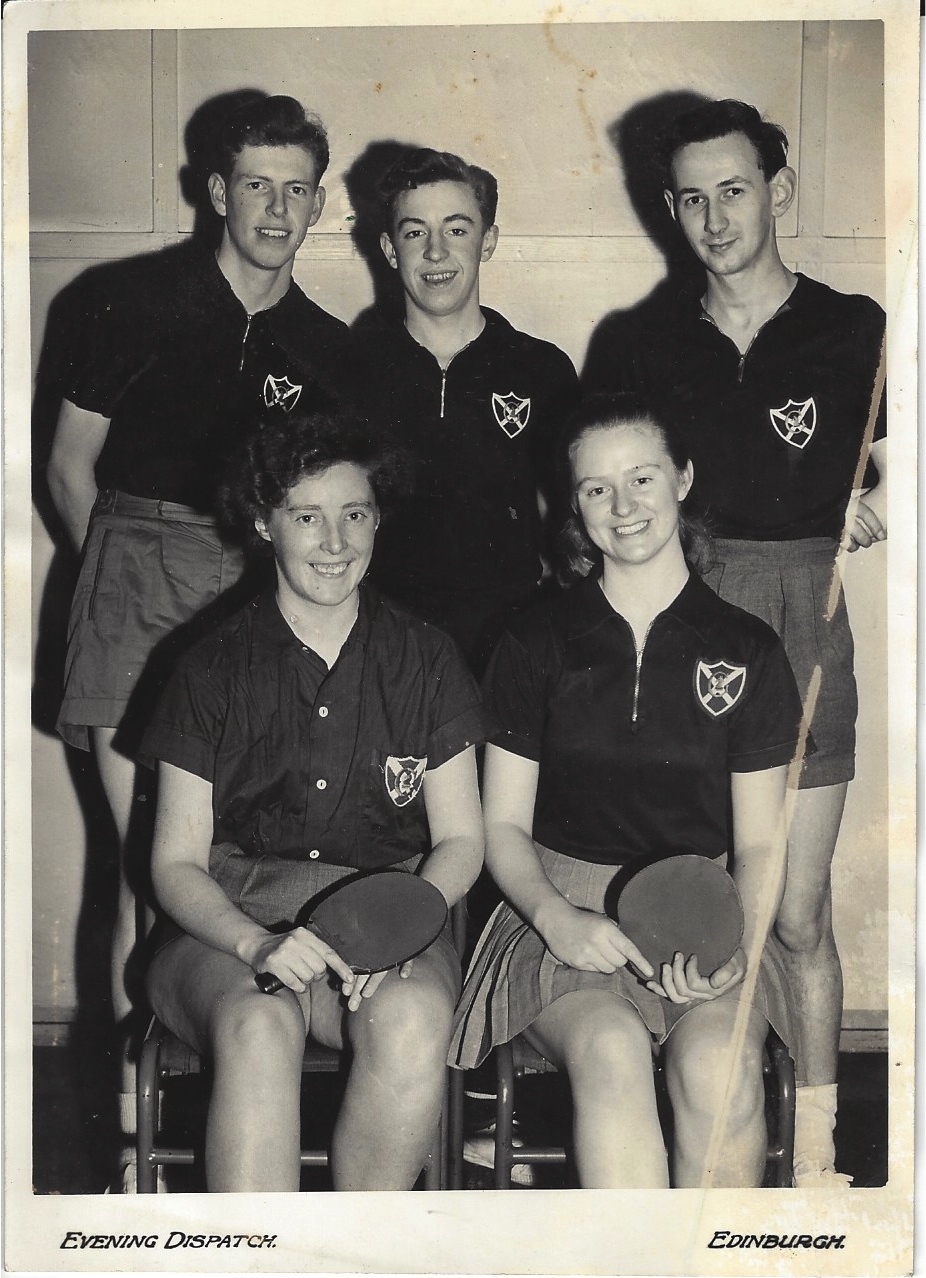
- Scottish team at the 1957 World Championships: (back row) Tommy McMichael, Ian Barclay and Bert Kerr; (front row) Helen Elliot and Helen Houliston.
-
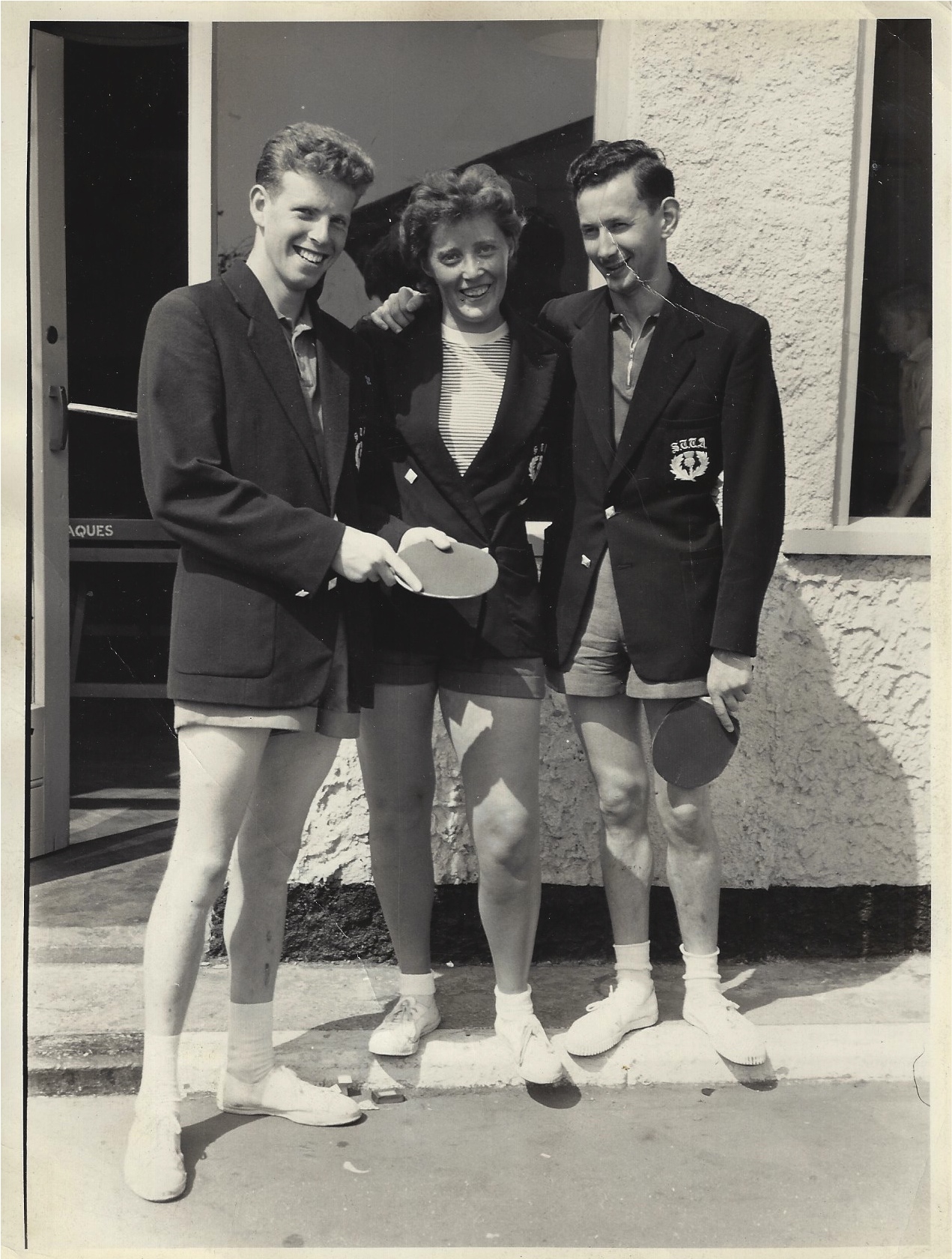
- Bert Kerr, Helen Elliot, Tommy McMichael at Murrayfield Indoor Sports Club 1956.
-
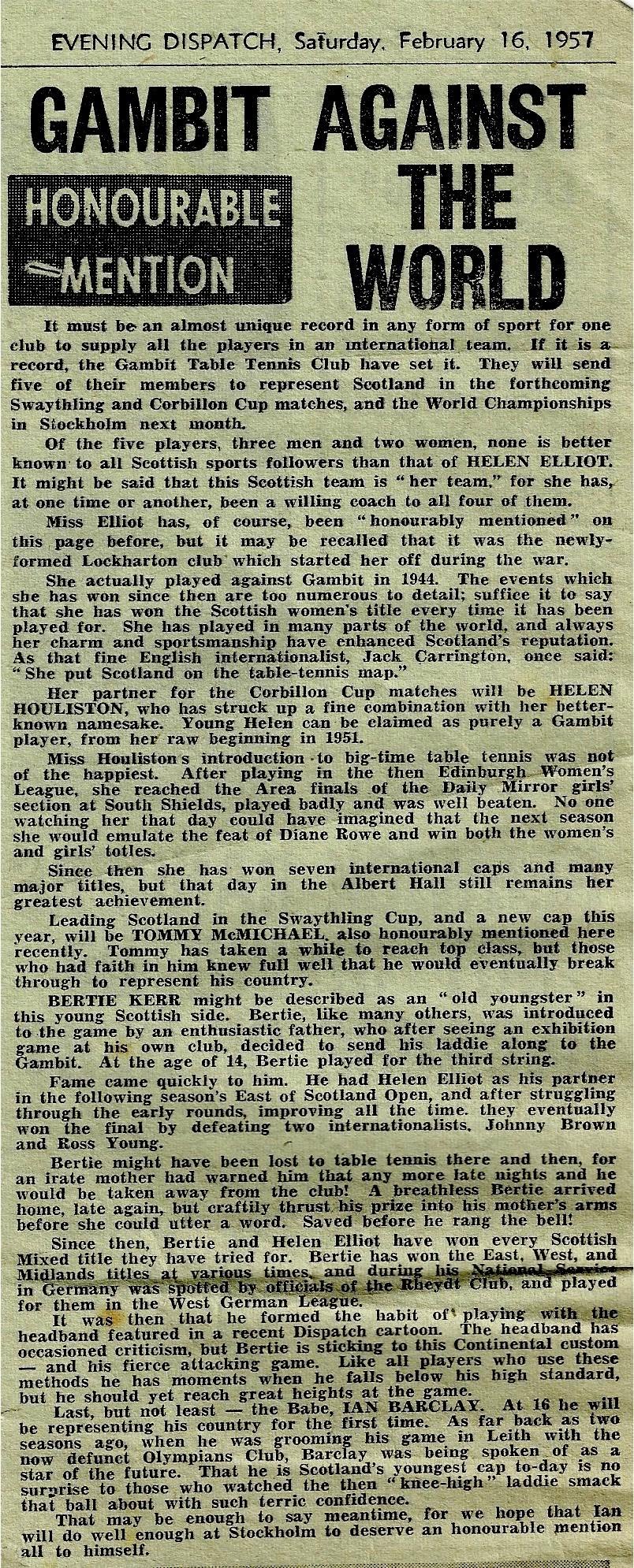
- Gambit against the World
Recommended Posts

Edinburgh Open 2027 – Entries Now Open
November 23, 2026
Double Award Recognition for Shetland Table Tennis Coach Chris Graham
November 23, 2026
Events this weekend
November 20, 2026